Interstellar Expansion WITHOUT Faster Than Light Travel

Related videos

The Universe Has Been Expanding Since the Big Bang. Just Not How We Thought.
PBS Space Time
136.4k views

Do We Live in the Rarest Solar System In The Universe? We're about to find out!
PBS Space Time
262.8k views

Why Is All DNA Right Handed?
PBS Space Time
449.5k views

Does Infinity - Infinity = an Electron?
PBS Space Time
590.7k views

Interstellar Spacecraft Or High Tech Experiment? | The Proof Is Out There
HISTORY
90.1k views

How To Detect Faster Than Light Travel
PBS Space Time
576.9k views

What If The Speed of Light is NOT CONSTANT?
PBS Space Time
1.2m views

Fermions Vs. Bosons Explained with Statistical Mechanics!
PBS Space Time
430.0k views

An Empty World, A Time Traveler, Another Dimension | Liminal Spaces: The Reality In-between
The Why Files
6.0m views
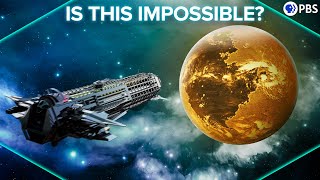
Is Interstellar Travel Impossible?
PBS Space Time
4.3m views
Unlock all features
FREE: Get instant access to 10 AI summaries, chats, or transcripts per day.
Unlock all features
FREE: Get instant access to 10 AI summaries, chats, or transcripts per day.
Unlock all features
FREE: Get instant access to 10 AI summaries, chats, or transcripts per day.
Unlock all features
FREE: Get instant access to 10 AI summaries, chats, or transcripts per day.
Unlock all features
FREE: Get instant access to 10 AI summaries, chats, or transcripts per day.
Related videos
The Universe Has Been Expanding Since the Big Bang. Just Not How We Thought.
PBS Space Time
136.4k views
Do We Live in the Rarest Solar System In The Universe? We're about to find out!
PBS Space Time
262.8k views
Why Is All DNA Right Handed?
PBS Space Time
449.5k views
Does Infinity - Infinity = an Electron?
PBS Space Time
590.7k views
Interstellar Spacecraft Or High Tech Experiment? | The Proof Is Out There
HISTORY
90.1k views
How To Detect Faster Than Light Travel
PBS Space Time
576.9k views
What If The Speed of Light is NOT CONSTANT?
PBS Space Time
1.2m views
Fermions Vs. Bosons Explained with Statistical Mechanics!
PBS Space Time
430.0k views
An Empty World, A Time Traveler, Another Dimension | Liminal Spaces: The Reality In-between
The Why Files
6.0m views
Is Interstellar Travel Impossible?
PBS Space Time
4.3m views
Top Comments (10)
What I never see in discussions of long time space travel, is how to keep machines going for hundreds, thousands or more years. Everything eventually breaks down from usage, and you'd have to keep many spares, or manufacture needed components on the ship, which also seems hard to do. Here in current reality, it's a miracle that Voyager 1 still works (barely) after 50 years, and that's a super simple machine, compared to a generational ship to Alpha Centauri.
I wonder if the generations who live and die on the ship would feel a little similar to the phrase at the start. Too late to see earth, too early to see the destination.
One of my favorite things to think about is a generation ship arriving at their new world only to be absolutely baffled by finding an even more advanced human civilization because FTL was figured out during the generation ships journey
"We'll have to have a society based on teamwork, harmony, and mutual respect." Well, there goes that idea.
Given how accurate Humanity's prior estimates have been for future space endeavors, I'm confident that 30 year countdown would be just long enough for us to realize we'd need another 70.
Imagine arriving after the 6300 year journey and finding out humans just warp jumped to Proxima a couple decades after your generation ship was launched.
Hey Space Timers! If you enjoy thinking about the realities of human space travel, then check out the documentary Space: The Longest Goodbye. And if you head over, let them know (politely) that Space Time sent you! https://www.youtube.com/watch?v=MT-pV48XBI4&t=0s&ab_channel=PBS UPDATE: Currently the YT Link is only accessible in the US. We're working to see if we can get full international access.
Realistically, I think our best first step would be building space colonies/stations. Once we have those working reliably we can start thinking about generation ships.
One of the concepts missed is "not putting all eggs in one basket". If the only constraints are time and technology, and not costs, resources and volunteers, then we're going to have to launch a number of these colonizing ships, just to increase the odds that one succeeds. Multiple ships with communication between the ships may help out with some of the human, psychological challenges too.
I think it is hard to look at the problem in Isolation. I mean, there are many credible voices that assume, it is at least a realistic possibility that we could end the process of aging within the next 30 years. If so, I would be very happy, that aside, that means 140 Years would be no big deal, especially if you have good AI / VR to keep you busy and entertained. Same for the genetics. If we have mastered genetics within the same time range, you only need two, or a hand full of people, since you would make the optimal adjustments for every new born anyway. - Just saying. If we reach 3-10 %, the other critical technologies would not have stagnated for these 30 years.
Unlock the Data Inside
Turn Videos into Knowledge
- Get FREE 10/day: transcripts, summaries, chats
- Chat with videos, export text & PDF
- $1 free API credit for RAG, chatbots & research
Free forever plan • All features unlocked
Top Comments (10)
What I never see in discussions of long time space travel, is how to keep machines going for hundreds, thousands or more years. Everything eventually breaks down from usage, and you'd have to keep many spares, or manufacture needed components on the ship, which also seems hard to do. Here in current reality, it's a miracle that Voyager 1 still works (barely) after 50 years, and that's a super simple machine, compared to a generational ship to Alpha Centauri.
I wonder if the generations who live and die on the ship would feel a little similar to the phrase at the start. Too late to see earth, too early to see the destination.
One of my favorite things to think about is a generation ship arriving at their new world only to be absolutely baffled by finding an even more advanced human civilization because FTL was figured out during the generation ships journey
"We'll have to have a society based on teamwork, harmony, and mutual respect." Well, there goes that idea.
Given how accurate Humanity's prior estimates have been for future space endeavors, I'm confident that 30 year countdown would be just long enough for us to realize we'd need another 70.
Imagine arriving after the 6300 year journey and finding out humans just warp jumped to Proxima a couple decades after your generation ship was launched.
Hey Space Timers! If you enjoy thinking about the realities of human space travel, then check out the documentary Space: The Longest Goodbye. And if you head over, let them know (politely) that Space Time sent you! https://www.youtube.com/watch?v=MT-pV48XBI4&t=0s&ab_channel=PBS UPDATE: Currently the YT Link is only accessible in the US. We're working to see if we can get full international access.
Realistically, I think our best first step would be building space colonies/stations. Once we have those working reliably we can start thinking about generation ships.
One of the concepts missed is "not putting all eggs in one basket". If the only constraints are time and technology, and not costs, resources and volunteers, then we're going to have to launch a number of these colonizing ships, just to increase the odds that one succeeds. Multiple ships with communication between the ships may help out with some of the human, psychological challenges too.
I think it is hard to look at the problem in Isolation. I mean, there are many credible voices that assume, it is at least a realistic possibility that we could end the process of aging within the next 30 years. If so, I would be very happy, that aside, that means 140 Years would be no big deal, especially if you have good AI / VR to keep you busy and entertained. Same for the genetics. If we have mastered genetics within the same time range, you only need two, or a hand full of people, since you would make the optimal adjustments for every new born anyway. - Just saying. If we reach 3-10 %, the other critical technologies would not have stagnated for these 30 years.