How to Evaluate the Derivative of an Inverse Function

Related videos
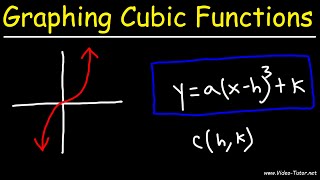
How to Graph Cubic Functions Using Transformations
The Organic Chemistry Tutor
72.3k views

How To Find The Sum of an Arithmetic Series - Algebra
The Organic Chemistry Tutor
168.3k views

How To Find The Slope and Y Intercept of a Line | Linear Equations - Algebra
The Organic Chemistry Tutor
176.3k views

How To Determine The Charge of Elements and Ions - Chemistry
The Organic Chemistry Tutor
430.1k views
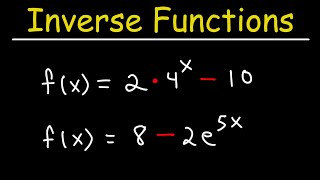
How To Find The Inverse of Exponential Functions
The Organic Chemistry Tutor
99.4k views

Inverse of Logarithmic Functions - PreCalculus
The Organic Chemistry Tutor
117.9k views
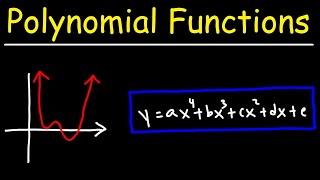
How To Find The Polynomial Function From a Graph
The Organic Chemistry Tutor
168.7k views

Properties of Functional Groups - Organic Chemistry
The Organic Chemistry Tutor
72.2k views

Derivatives of Inverse Hyperbolic Functions
The Organic Chemistry Tutor
129.4k views
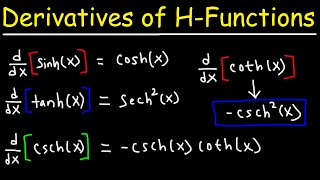
Derivatives of Hyperbolic Functions
The Organic Chemistry Tutor
207.3k views
Unlock all features
FREE: Get instant access to 10 AI summaries, chats, or transcripts per day.
Unlock all features
FREE: Get instant access to 10 AI summaries, chats, or transcripts per day.
Unlock all features
FREE: Get instant access to 10 AI summaries, chats, or transcripts per day.
Unlock all features
FREE: Get instant access to 10 AI summaries, chats, or transcripts per day.
Unlock all features
FREE: Get instant access to 10 AI summaries, chats, or transcripts per day.
Related videos
How to Graph Cubic Functions Using Transformations
The Organic Chemistry Tutor
72.3k views
How To Find The Sum of an Arithmetic Series - Algebra
The Organic Chemistry Tutor
168.3k views
How To Find The Slope and Y Intercept of a Line | Linear Equations - Algebra
The Organic Chemistry Tutor
176.3k views
How To Determine The Charge of Elements and Ions - Chemistry
The Organic Chemistry Tutor
430.1k views
How To Find The Inverse of Exponential Functions
The Organic Chemistry Tutor
99.4k views
Inverse of Logarithmic Functions - PreCalculus
The Organic Chemistry Tutor
117.9k views
How To Find The Polynomial Function From a Graph
The Organic Chemistry Tutor
168.7k views
Properties of Functional Groups - Organic Chemistry
The Organic Chemistry Tutor
72.2k views
Derivatives of Inverse Hyperbolic Functions
The Organic Chemistry Tutor
129.4k views
Derivatives of Hyperbolic Functions
The Organic Chemistry Tutor
207.3k views
Top Comments (10)
Nice first one and nice vid who agrees 👍
My second teacher 😭🔥
Just came here to say thanks for helping me throughout school. Glad to see you're still posting!
Thank you sir 🥰
Does anybody know where i can go to get a more basic understanding of this topic (more specifically that formula)??
Print The Test - 100 Questions: https://bit.ly/3Zh7X86 Access The Full Test: https://bit.ly/41WNmI9 Derivatives Test Review - Playlist: https://bit.ly/4rkXTqz Direct Link to Part 1 - Q1 to Q50: https://bit.ly/3LRMfob
Just remember dy/dx = 1/(dx/dy)
Please never stop making videos
(f-)'(y)=1/f'(x) The derivative of the inverse function at y is 1/derivative of the function at x. i.e dx/dy=1/(dy/dx) where f(x) must be evaluated at x and f-(y) must be evaluated at y. These follow from y=f(x) and x=f-(y). Confusion is removed if the domain and range are not confused by using the same variable symbol.
00:55 Just holding here for a moment to see if I understand. So, for example, arctan'x = 1/ sec^2 (arctan x), right?
Unlock the Data Inside
Turn Videos into Knowledge
- Get FREE 10/day: transcripts, summaries, chats
- Chat with videos, export text & PDF
- $1 free API credit for RAG, chatbots & research
Free forever plan • All features unlocked
Top Comments (10)
Nice first one and nice vid who agrees 👍
My second teacher 😭🔥
Just came here to say thanks for helping me throughout school. Glad to see you're still posting!
Thank you sir 🥰
Does anybody know where i can go to get a more basic understanding of this topic (more specifically that formula)??
Print The Test - 100 Questions: https://bit.ly/3Zh7X86 Access The Full Test: https://bit.ly/41WNmI9 Derivatives Test Review - Playlist: https://bit.ly/4rkXTqz Direct Link to Part 1 - Q1 to Q50: https://bit.ly/3LRMfob
Just remember dy/dx = 1/(dx/dy)
Please never stop making videos
(f-)'(y)=1/f'(x) The derivative of the inverse function at y is 1/derivative of the function at x. i.e dx/dy=1/(dy/dx) where f(x) must be evaluated at x and f-(y) must be evaluated at y. These follow from y=f(x) and x=f-(y). Confusion is removed if the domain and range are not confused by using the same variable symbol.
00:55 Just holding here for a moment to see if I understand. So, for example, arctan'x = 1/ sec^2 (arctan x), right?