How Earth REALLY Moves Through the Galaxy

Related videos

We Found Galaxies Too Old for the Universe
PBS Space Time
152.5k views

Why The Multiverse Could Be Real
PBS Space Time
518.6k views

NEW EVIDENCE: Earth Had Rings (and Might Regain Them)
PBS Space Time
501.4k views

How Astrophysics Can (LITERALLY) Save the World
PBS Space Time
293.6k views

How Many Black Holes Are In The Solar System?
PBS Space Time
976.7k views

Does the Planck Length Break E=MC^2?
PBS Space Time
610.9k views
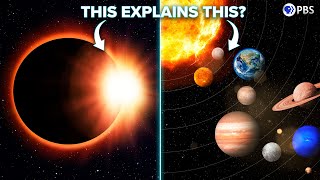
How Eclipses Revealed Our Solar System
PBS Space Time
364.4k views

Can We Move THE SUN?
PBS Space Time
397.8k views

How Far Beyond Earth Could Humanity Spread?
PBS Space Time
1.2m views
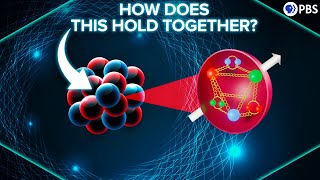
How Does The Nucleus Hold Together?
PBS Space Time
943.0k views
Unlock all features
FREE: Get instant access to 10 AI summaries, chats, or transcripts per day.
Unlock all features
FREE: Get instant access to 10 AI summaries, chats, or transcripts per day.
Unlock all features
FREE: Get instant access to 10 AI summaries, chats, or transcripts per day.
Unlock all features
FREE: Get instant access to 10 AI summaries, chats, or transcripts per day.
Unlock all features
FREE: Get instant access to 10 AI summaries, chats, or transcripts per day.
Related videos
We Found Galaxies Too Old for the Universe
PBS Space Time
152.5k views
Why The Multiverse Could Be Real
PBS Space Time
518.6k views
NEW EVIDENCE: Earth Had Rings (and Might Regain Them)
PBS Space Time
501.4k views
How Astrophysics Can (LITERALLY) Save the World
PBS Space Time
293.6k views
How Many Black Holes Are In The Solar System?
PBS Space Time
976.7k views
Does the Planck Length Break E=MC^2?
PBS Space Time
610.9k views
How Eclipses Revealed Our Solar System
PBS Space Time
364.4k views
Can We Move THE SUN?
PBS Space Time
397.8k views
How Far Beyond Earth Could Humanity Spread?
PBS Space Time
1.2m views
How Does The Nucleus Hold Together?
PBS Space Time
943.0k views
Top Comments (10)
I can't help but notice that at the galactic scale, the journey of the sun is so short-lived. If the galactic year is 230 million and the sun is roughly 5 billion year old, that means the sun is only at its 22nd orbit around the center of the galaxy. Given that the sun has 5 billion more years before turning into a white a dwarf, its whole journey as shining star would last 44 galactic years... assuming the sun doesn't run into another star in the next 5 billion years. Also, great episode and thank you for your hard work.
I can't believe how well done these videos are, and they are free. I'm so grateful.
Currently working through all the previous videos, Matt and the PBS team have made an invaluable resource
Surely one of the pinnacles of wisdom and science is the ability to interpret and break-down complex information into everyday terms for those without years of study to appreciate and understand with a curiosity to know more. Great video.
What a fantastic teacher and researcher. I highly respect someone who corrects himself and answers key questions at the end. Thank you for this great content!
Words cannot describe the excitement of seeing a new space time video being posted... its like the scholastic book fair for adults
As an old git who has had a life-long layman's interest in such subjects, it's still very enjoyable to learn more about such, even at a fundamental level that helps stitch together other things I've learned so that I get an even greater understanding/appreciation of the bigger picture.... and PBS serves up those juicy morsels with impressive regularity.
I was literally trying to envision the path through the universe the other day and I just couldn't get past what it might look like based on just our galaxy, let alone everything else around us
I love the little “this is what I think” in the outro. That kind of thing just feels so refreshing to my brain after trying to understand all the science of space-time.
Monty Python explained all of this back in 1983: "We're thirty thousand light years from galactic central point We go 'round every two hundred million years And our galaxy is only one of millions of billions In this amazing and expanding universe"
Unlock the Data Inside
Turn Videos into Knowledge
- Get FREE 10/day: transcripts, summaries, chats
- Chat with videos, export text & PDF
- $1 free API credit for RAG, chatbots & research
Free forever plan • All features unlocked
Top Comments (10)
I can't help but notice that at the galactic scale, the journey of the sun is so short-lived. If the galactic year is 230 million and the sun is roughly 5 billion year old, that means the sun is only at its 22nd orbit around the center of the galaxy. Given that the sun has 5 billion more years before turning into a white a dwarf, its whole journey as shining star would last 44 galactic years... assuming the sun doesn't run into another star in the next 5 billion years. Also, great episode and thank you for your hard work.
I can't believe how well done these videos are, and they are free. I'm so grateful.
Currently working through all the previous videos, Matt and the PBS team have made an invaluable resource
Surely one of the pinnacles of wisdom and science is the ability to interpret and break-down complex information into everyday terms for those without years of study to appreciate and understand with a curiosity to know more. Great video.
What a fantastic teacher and researcher. I highly respect someone who corrects himself and answers key questions at the end. Thank you for this great content!
Words cannot describe the excitement of seeing a new space time video being posted... its like the scholastic book fair for adults
As an old git who has had a life-long layman's interest in such subjects, it's still very enjoyable to learn more about such, even at a fundamental level that helps stitch together other things I've learned so that I get an even greater understanding/appreciation of the bigger picture.... and PBS serves up those juicy morsels with impressive regularity.
I was literally trying to envision the path through the universe the other day and I just couldn't get past what it might look like based on just our galaxy, let alone everything else around us
I love the little “this is what I think” in the outro. That kind of thing just feels so refreshing to my brain after trying to understand all the science of space-time.
Monty Python explained all of this back in 1983: "We're thirty thousand light years from galactic central point We go 'round every two hundred million years And our galaxy is only one of millions of billions In this amazing and expanding universe"