3 Unusual Supernovae That Challenge Current Physical Models

Related videos
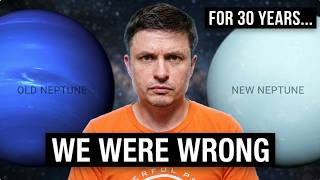
Studies on Neptune Challenge Assumptions About Its Composition and Moons
Anton Petrov
14.6k views
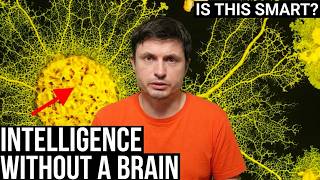
What Is Intelligence? Studies on Slime Mold and Ants Challenge Our Understanding
Anton Petrov
8.0k views

The Rare Supernova That Leaves Absolutely Nothing Behind
Anton Petrov
58.4k views

Study Finds Major Flaws in Our Model of the Universe and Physicists Can't Agree Why
Anton Petrov
81.3k views

Major Little Red Dot Revelation Just Challenged Galactic Models
Anton Petrov
73.3k views

Red Monster Galaxy In the Early Universe That Breaks Our Models
Anton Petrov
39.3k views

A 4km Drive That Changed Physics: The First Antimatter Transport
Anton Petrov
66.4k views

Cosmological Models Are In Trouble After Recent Studies on Dark Energy
Anton Petrov
29.3k views

Record Breaking Massive Black Holes Challenge Modern Models
Anton Petrov
53.6k views

First Ever Time Crystal You Can Physically Touch
Anton Petrov
62.7k views
New Observations Reveal Surprising Asymmetry and Complexity in Supernova Explosions
Discover how recent, high-speed observations shatter decades-old assumptions about the spherical nature of star explosions. Learn why these findings radically complicate our measurement of the universe and stellar evolution.
Short Summary
- Scientists achieved the first real-time measurement of a supernova's shape, revealing it was "olive-shaped" and asymmetric, not spherical [00:04:19].
- Visual proof emerged supporting the "double detonation" model for some Type Ia supernovae, potentially undermining distance measurements [00:07:43].
- The discovery of a "stripped core supernova" exposes deep elemental layers previously hidden inside massive stars, challenging standard explosion models [00:09:57].
This presentation reviews three major recent studies providing direct evidence contradicting long-held theoretical predictions about how stars die. Understanding these asymmetries is crucial for accurate cosmic measurements and understanding element forging.
Unlock all features
FREE: Get instant access to 10 AI summaries, chats, or transcripts per day.
Unlock all features
FREE: Get instant access to 10 AI summaries, chats, or transcripts per day.
Unlock all features
FREE: Get instant access to 10 AI summaries, chats, or transcripts per day.
Unlock all features
FREE: Get instant access to 10 AI summaries, chats, or transcripts per day.
Unlock all features
FREE: Get instant access to 10 AI summaries, chats, or transcripts per day.
Related videos
Studies on Neptune Challenge Assumptions About Its Composition and Moons
Anton Petrov
14.6k views
What Is Intelligence? Studies on Slime Mold and Ants Challenge Our Understanding
Anton Petrov
8.0k views
The Rare Supernova That Leaves Absolutely Nothing Behind
Anton Petrov
58.4k views
Study Finds Major Flaws in Our Model of the Universe and Physicists Can't Agree Why
Anton Petrov
81.3k views
Major Little Red Dot Revelation Just Challenged Galactic Models
Anton Petrov
73.3k views
Red Monster Galaxy In the Early Universe That Breaks Our Models
Anton Petrov
39.3k views
A 4km Drive That Changed Physics: The First Antimatter Transport
Anton Petrov
66.4k views
Cosmological Models Are In Trouble After Recent Studies on Dark Energy
Anton Petrov
29.3k views
Record Breaking Massive Black Holes Challenge Modern Models
Anton Petrov
53.6k views
First Ever Time Crystal You Can Physically Touch
Anton Petrov
62.7k views
Top Comments (10)
My team was the first to identify that supernova type II do not explode symmetrically. It was a paper in 1993 about supernova SN1993J. The paper is Trammel, Hines and Wheeler in the astronomical journal letters. Since then, many supernova had been measured with spectropolarimetry, showing asymmetry
Hello wonderful Anton! I've been a follower since less than 50k, I watch your videos every day, and I buy your merch!! The dedication and perseverance you have to make such high quality informative videos daily is mind-boggling. You sir are a treasure and a wonderful person! Thank you for making this wonderful content. When I'm having a bad day and I see your video pop-up, it immediately makes my brain start wondering what you will teach us today
When I feel down, always a good reminder there's a supernova somewhere creating exotic matter.
Astrophysicists are constantly adjusting models based on new observations. It's just part their job as scientists. Also, they like new observations because they learn from them.
Huh. Well it’s an animation of the supernova, but hey, no judgement. If that’s legit, we could be in for a treat. Betelgeuse Betelgeuse Betelgeuse
“Strange observation that breaks current model(of the month)”
Perhaps the variability introduced by the double detonation of Type 1A could help explain tension in the cosmological constant.
Thank you again, Anton. I have been following this kind of stuff since the 1970s. My sources came from 1960 onwards. I get the impression that, even though thousands of brilliant people have dedicated their careers to finding answers, what we have now is mostly even more intriguing questions. Science is fantastic.
The whole white dward thing sent me down a 3h rabbit hole! Thanks anton i totally didnt need to sleep 😤😤
Thank you for marking the video at the beginning as a visualization. I appreciate that.
Unlock the Data Inside
Turn Videos into Knowledge
- Get FREE 10/day: transcripts, summaries, chats
- Chat with videos, export text & PDF
- $1 free API credit for RAG, chatbots & research
Free forever plan • All features unlocked
Top Comments (10)
My team was the first to identify that supernova type II do not explode symmetrically. It was a paper in 1993 about supernova SN1993J. The paper is Trammel, Hines and Wheeler in the astronomical journal letters. Since then, many supernova had been measured with spectropolarimetry, showing asymmetry
Hello wonderful Anton! I've been a follower since less than 50k, I watch your videos every day, and I buy your merch!! The dedication and perseverance you have to make such high quality informative videos daily is mind-boggling. You sir are a treasure and a wonderful person! Thank you for making this wonderful content. When I'm having a bad day and I see your video pop-up, it immediately makes my brain start wondering what you will teach us today
When I feel down, always a good reminder there's a supernova somewhere creating exotic matter.
Astrophysicists are constantly adjusting models based on new observations. It's just part their job as scientists. Also, they like new observations because they learn from them.
Huh. Well it’s an animation of the supernova, but hey, no judgement. If that’s legit, we could be in for a treat. Betelgeuse Betelgeuse Betelgeuse
“Strange observation that breaks current model(of the month)”
Perhaps the variability introduced by the double detonation of Type 1A could help explain tension in the cosmological constant.
Thank you again, Anton. I have been following this kind of stuff since the 1970s. My sources came from 1960 onwards. I get the impression that, even though thousands of brilliant people have dedicated their careers to finding answers, what we have now is mostly even more intriguing questions. Science is fantastic.
The whole white dward thing sent me down a 3h rabbit hole! Thanks anton i totally didnt need to sleep 😤😤
Thank you for marking the video at the beginning as a visualization. I appreciate that.